
The solar panel industry is one of the thriving industries throughout the world. As a result, we can observe continuous innovation in the on-grid solar systems.
The price of a 15 kW on-grid solar panel system in Chandigarh can vary based on several factors, including the brand, quality of components, installation charges, and available subsidies. On average, the cost might range from 5.5 Lakhs This estimate includes solar panels, inverters, mounting structures, cabling, and installation services. It’s important to consider that government incentives or subsidies can further reduce the overall cost. Additionally, prices may vary based on advancements in technology and market conditions, so it’s advisable to get quotes from multiple local installers for the most accurate and up-to-date pricing.
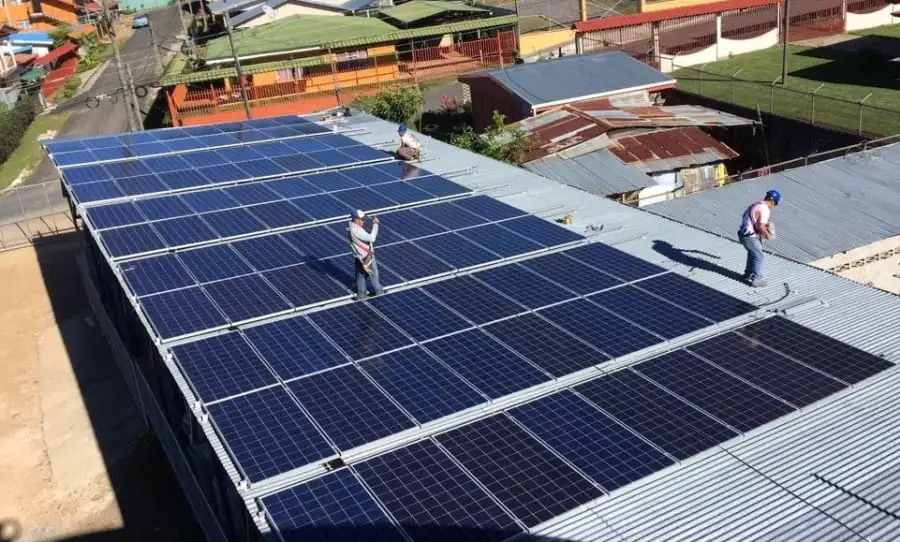
Components of 15KW On-Grid Solar System
A 15 kW on-grid solar system is designed to harness solar energy and feed it into the electricity grid. Here are the core components typically involved in such a system:
Photovoltaic (PV) panels are the primary component that converts sunlight into electricity. A 15 kW system might require around 28 panels, depending on the panel wattage (typically between 540 to 580 watts per panel).
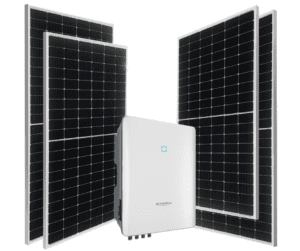
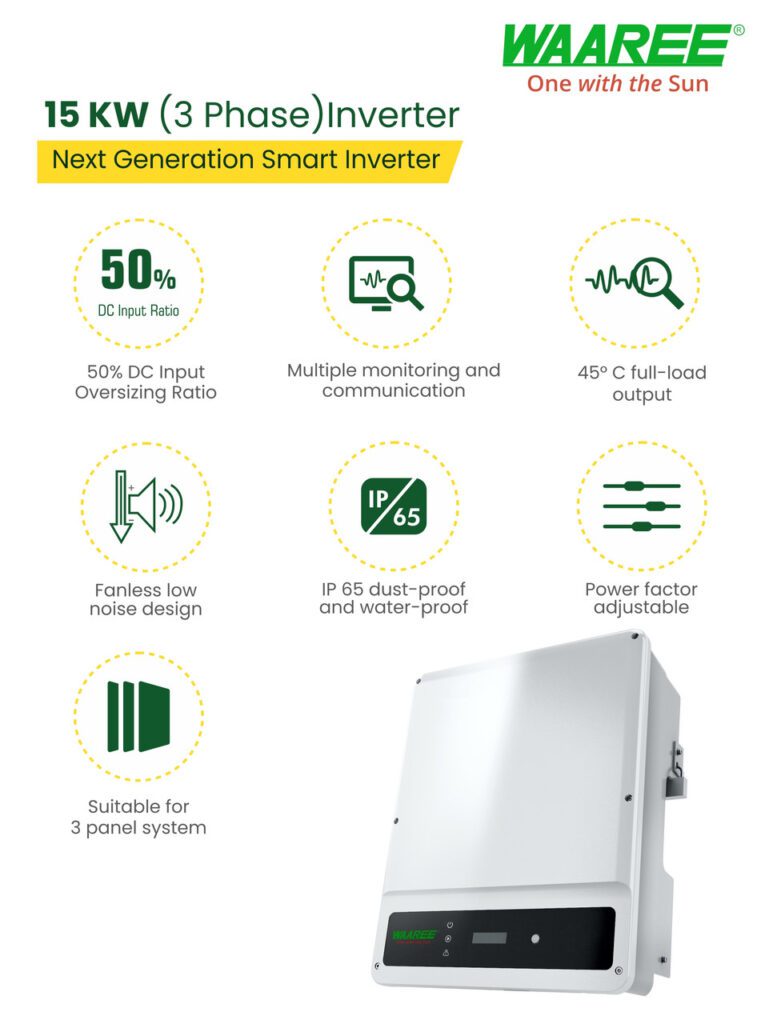
The inverter is crucial in converting the direct current (DC) produced by the solar panels into alternating current (AC), which is compatible with the grid. For a 15 kW system, a single or multiple inverters designed to handle 15 kW of power are necessary. There are options like string inverters, central inverters, and microinverters.
These are structures used to fix the solar panels on rooftops or on the ground. The mounting system ensures optimal angle and orientation for maximum sunlight exposure.

It aggregates the output of multiple strings of solar panels into a single DC output, including safety features like fuses or circuit breakers.
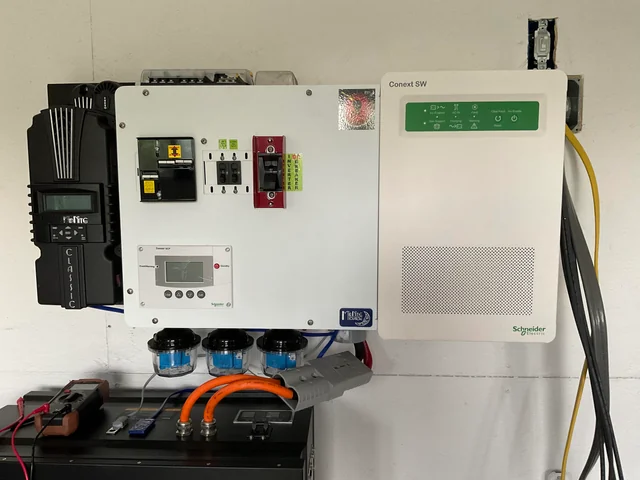
These switches allow for the safe disconnection of the system from the grid or between the panels and the inverter, which is necessary for maintenance or during emergencies.
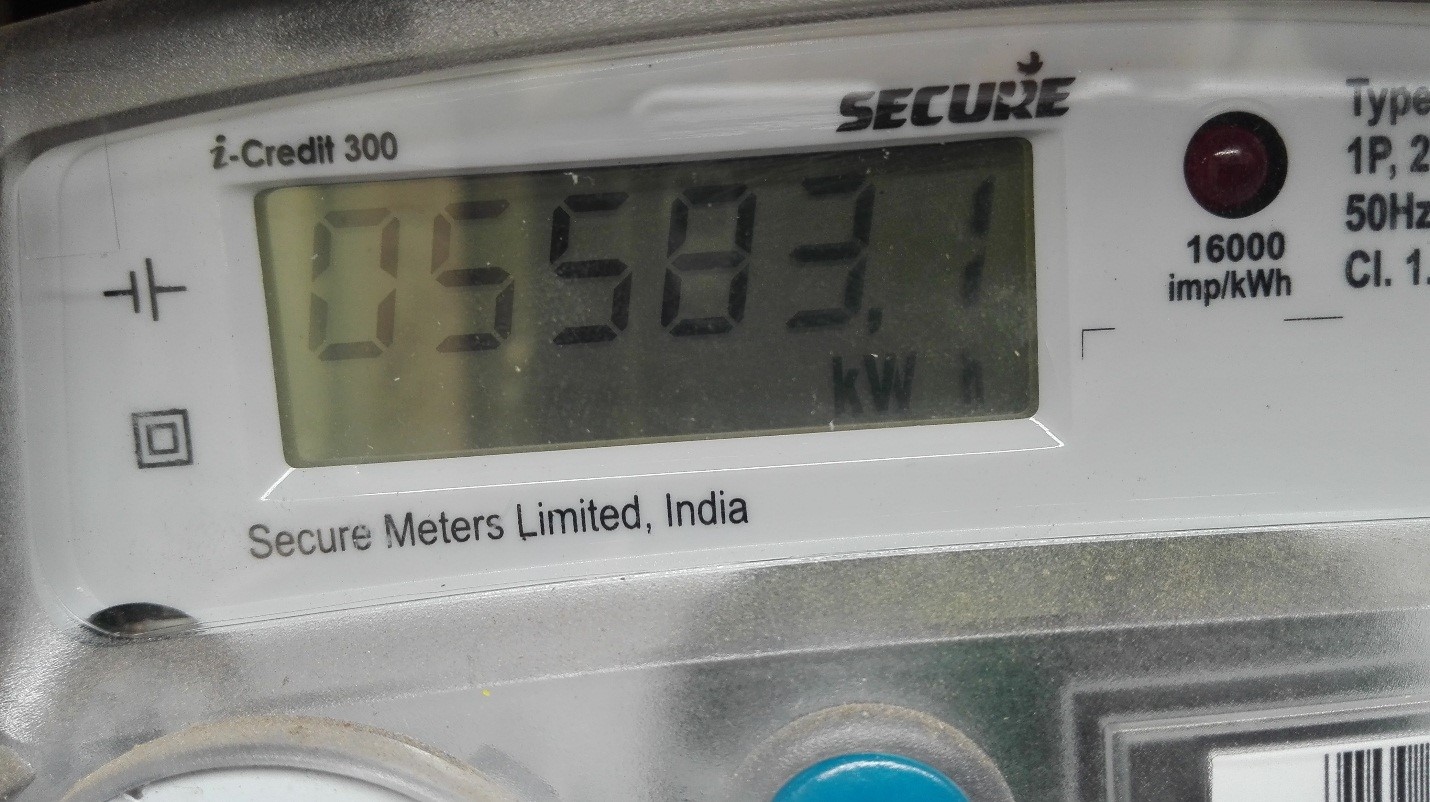
This device measures the electricity consumed from the grid and the electricity exported back into the grid, enabling accurate billing for net metering purposes.
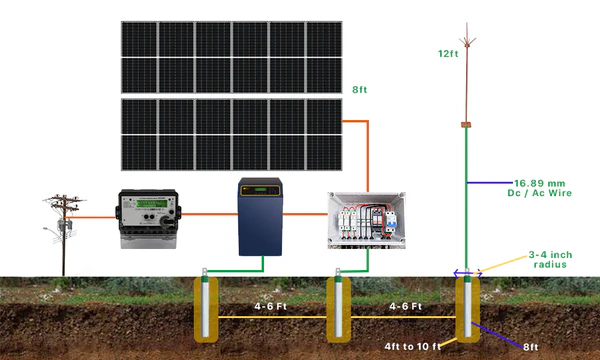
These safety features protect the solar setup and surrounding structure from lightning strikes and electrical faults by providing a path for excess current to disperse safely into the ground.
Benefits of 1kw to 20KW On Grid Solar System
- Investing in an on-grid solar system ranging from 1kW to 20kW can bring a variety of benefits. First and foremost, such systems can significantly reduce electricity bills. By generating your own electricity, the dependency on conventional energy sources diminishes, resulting in lower costs.
- Environmentally, these systems contribute to reducing carbon footprints, as solar energy is a clean and renewable resource. This helps in lessening air pollution and mitigating climate change impacts. Furthermore, by supporting clean energy, you play a part in promoting sustainable practices.
- On-grid solar systems also offer the advantage of net metering. This means that any excess energy produced can be fed back into the grid, allowing users to potentially earn credits or financial compensation. This makes the system not only cost-effective but also a source of potential income.
- Installation and maintenance are generally straightforward. With the advancements in technology, these systems are becoming more durable and efficient, thus requiring minimal upkeep. Many governments and local bodies offer incentives or subsidies for solar panel installation, further enhancing the financial attractiveness.
- A 1kW to 20kW system can be tailored to suit various needs, whether for residential use, small businesses, or community projects. The scalability ensures flexibility depending on energy requirements and budget constraints.
An On-Grid Solar System of this capacity offers economic, environmental, and functional benefits, making it a wise choice for sustainable energy solutions.
Specification of 15kW On-Grid Solar System
How much area is required for a 15kW solar system?
How long does a 15kW solar system last?
How Long Will A 15kW Solar System Last? Like most solar systems, the average life span of a 15kW system is 25 to 30 years. According to the National Renewable Energy Laboratory, solar panels face an average efficiency drop of 0.8% each year.
How much power can a 15kW solar system produce?
As a general rule of thumb, a 7kW solar system should produce between 30kWh and 40kWh every day whereas a 15kW system can produce an average of 75kWh each day.
How much battery is required for a 15kW Hybrid solar system?
| Solar panel system | Total energy generated in 5 hours | Number of batteries needed |
|---|---|---|
| 6kW | 30kWh | 6 |
| 10kW | 50kWh | 10 |
| 15kW | 75kWh | 15 |
| 20kW | 100kWh | 20 |
How many panels are in a 15kW solar system?
A modern-day 15kW solar system will be comprised of between about 28 panels and will require about 75-90 m2 of roof space, depending on the wattage of the panels (which are typically between 540 to 580KW each).
What advantages does a hybrid solar system offer?
A hybrid solar system combines the benefits of both grid-tied and off-grid systems by integrating solar panels, battery storage, and a connection to the local power grid.
What is on-grid and off-grid?
On-grid and off-grid solar power systems are the two primary categories. On-grid solutions add electricity to what you get from your utility solar company by connecting to the grid. Off-grid solutions, on the other hand, depend on battery storage and are completely autonomous.